
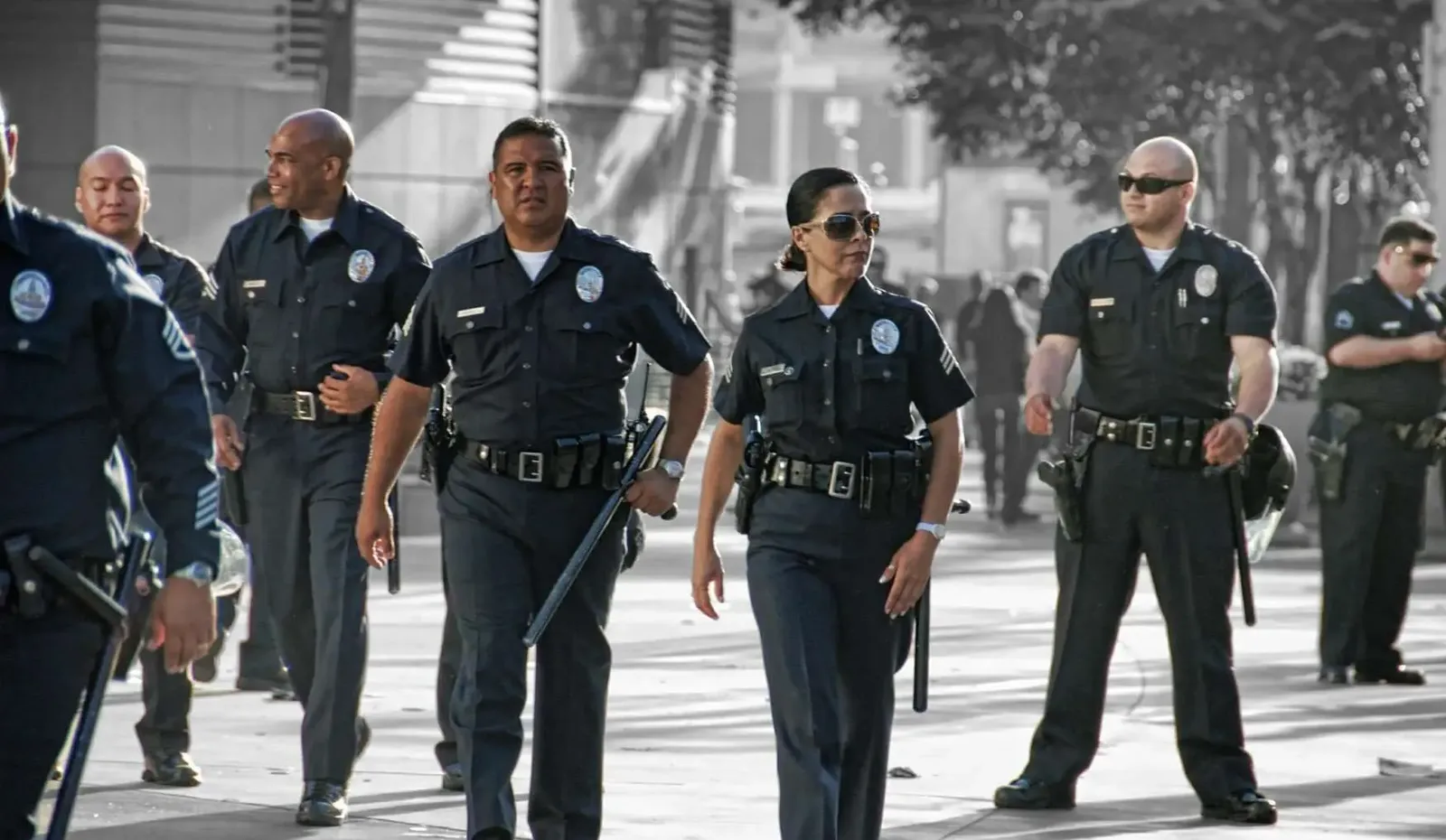
Police, sheriffs, troopers, federal agents, corrections
Law Enforcement
Law enforcement describes the agencies and employees responsible for enforcing the law, maintaining public order, and managing public safety. Their core work is identifying, apprehending, and detaining people suspected of crimes. Corrections belongs here too: the officers who supervise people who have been arrested and convicted, in institutions and in community supervision.
What the job asks
- Respond to calls for help at any hour, often without knowing what is waiting on the other side of the door.
- Investigate crimes, document evidence, and testify in court.
- Work traffic, patrol neighborhoods, and serve as the first contact in a crisis.
- Supervise people in custody and in community corrections.
How you can help
- During a traffic stop, pull over safely to the right, stay in your vehicle, and keep your hands where they can be seen.
- Save 911 for emergencies. For reports that are not urgent, use your agency's non-emergency number.
- Lock your vehicle and take valuables with you. Most vehicle burglaries are crimes of opportunity.
Recognition
Peace Officers Memorial Day and Police Week
May 15, during the week of May 15
See the full recognition calendar
Support line
CopLine
1-800-267-5463
Confidential peer line answered by retired officers, 24/7.
Questions people ask
What is the difference between a police officer, a deputy, and a trooper?
Police officers usually work for a city. Sheriff's deputies work for a county sheriff, who in most states is elected, and they often run the county jail and patrol outside city limits. State troopers work for the state, most often on highways.
When should I call 911 instead of the non-emergency number?
Call 911 when a life is in danger, a crime is happening now, or someone needs help right away. For something that can wait, like a car break-in you found the next morning, use your local non-emergency number.
How can I thank an officer?
A short note to the department, a thank you in person, or showing up for a local department event. Recognition from the community they serve means more than most people realize.